Raindrop
Insert/delete and query your raindrop.io bookmarks with SQL.
Installation
anyquery install raindrop
Configuration
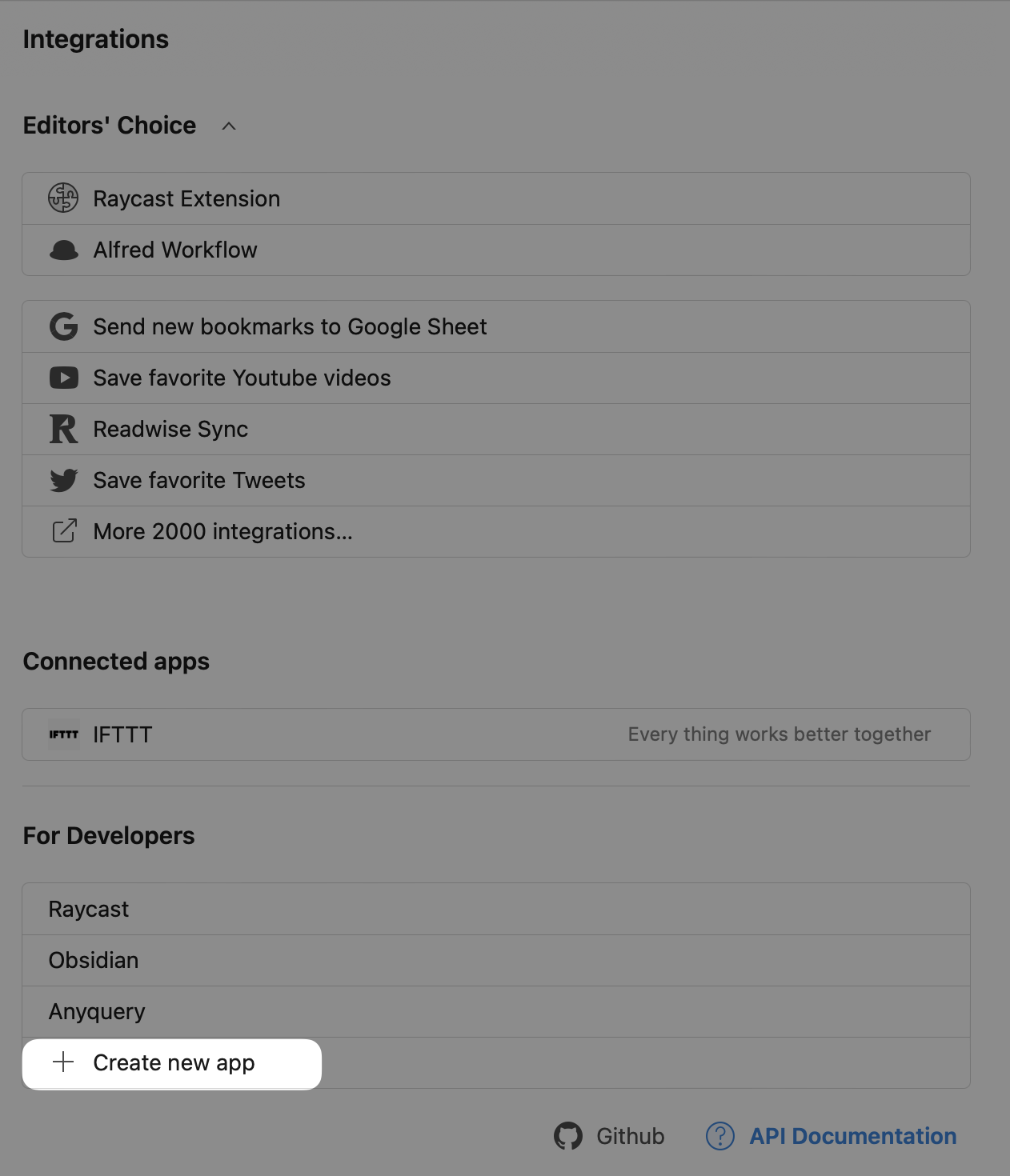
- Go to https://app.raindrop.io/settings/integrations
- Click on "Create new app"
- Give it the name you want and click on "Create"
- Click on the app you just created
- Click "Create test token" and copy the token
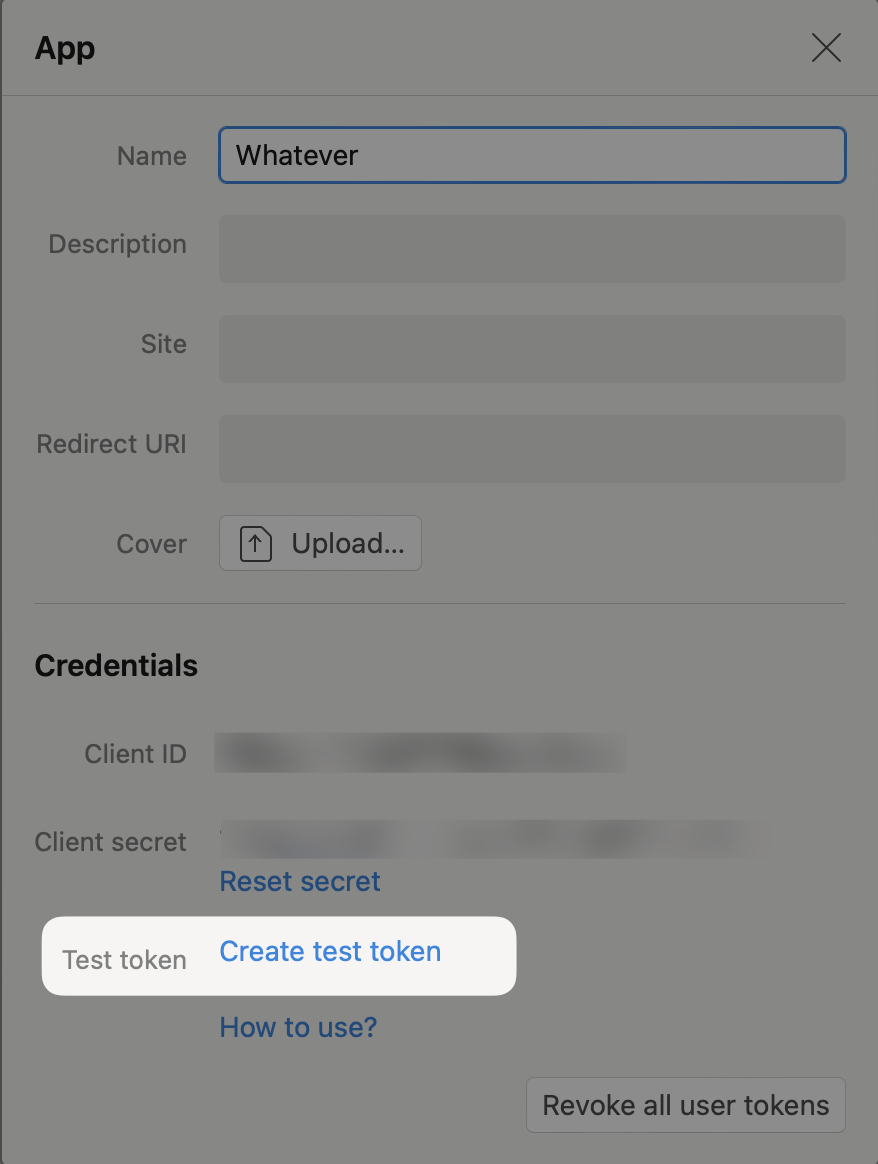
- Fill it in when requested by
anyqueryin the installation process
Usage
-- Insert a bookmark
INSERT INTO raindrop_items(title, link, created_at, reminder) VALUES ('A cool SQL tool', 'https://anyquery.dev', '2024-07-10', '2024-07-20');
-- Delete a bookmark
DELETE FROM raindrop_items WHERE title = 'A cool SQL tool';
-- Query all bookmarks
SELECT * FROM raindrop_items;
Schema
| Column index | Column name | type |
|---|---|---|
| 0 | id | INTEGER |
| 1 | link | TEXT |
| 2 | title | TEXT |
| 3 | excerpt | TEXT |
| 4 | note | TEXT |
| 5 | user_id | TEXT |
| 6 | cover | TEXT |
| 7 | tags | TEXT |
| 8 | important | INTEGER |
| 9 | removed | INTEGER |
| 10 | created_at | TEXT |
| 11 | last_updated_at | TEXT |
| 12 | domain | TEXT |
| 13 | collection_id | INTEGER |
| 14 | reminder | TEXT |
Known limitations
- The plugin does not support the
UPDATEoperation due to rate limiting issues with the Raindrop API. See items.go:377 in the source code for more information. - The plugin caches your bookmarks for an hour. If you want to clear the cache, you can run
SELECT clear_plugin_cache('raindrop'), and then restartanyquery. - The plugin buffers the INSERT/DELETE operations and sends them in batches to the Raindrop API. This can lead to a delay in the changes appearing in your Raindrop account. If you want to flush the buffer, run a simple SELECT query like
SELECT * FROM raindrop_items LIMIT 1. - When you insert a row, not all fields will be populated in raindrop.io. For example, id, user_id, removed, domain, etc.
- Tags are represented as a JSON array in the database. You can use the JSON operator like in PostgreSQL to query the data. For example,
SELECT tags ->> '$[0]' FROM raindrop_items;will return the first tag. When inserting data, it is expected that you provide a JSON array of tags. - Date are flexible. While they are always returned as RFC 3339 strings, you can insert them in the following formats : YYYY-MM-DD, YYYY-MM-DDTHH:MM:SSZ, HH:MM:SS, or a Unix timestamp.
